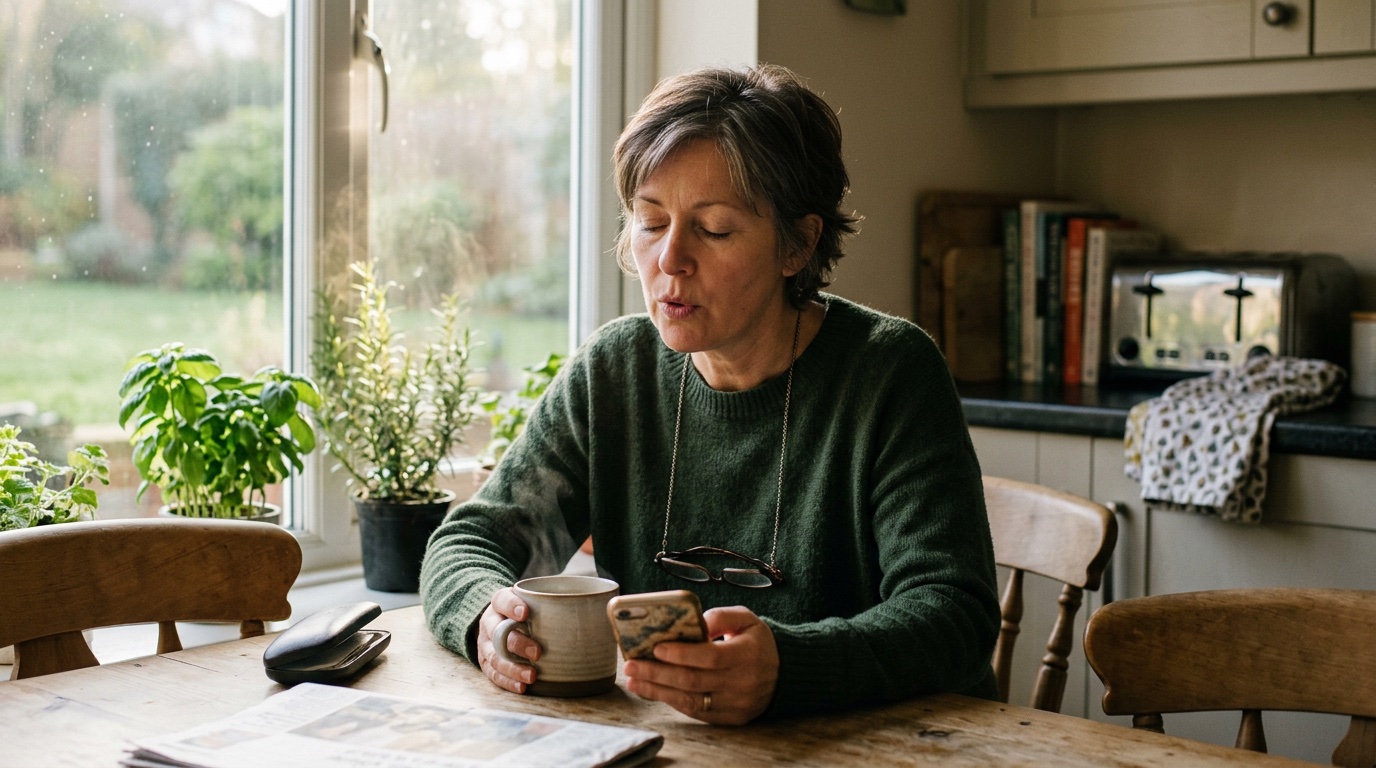
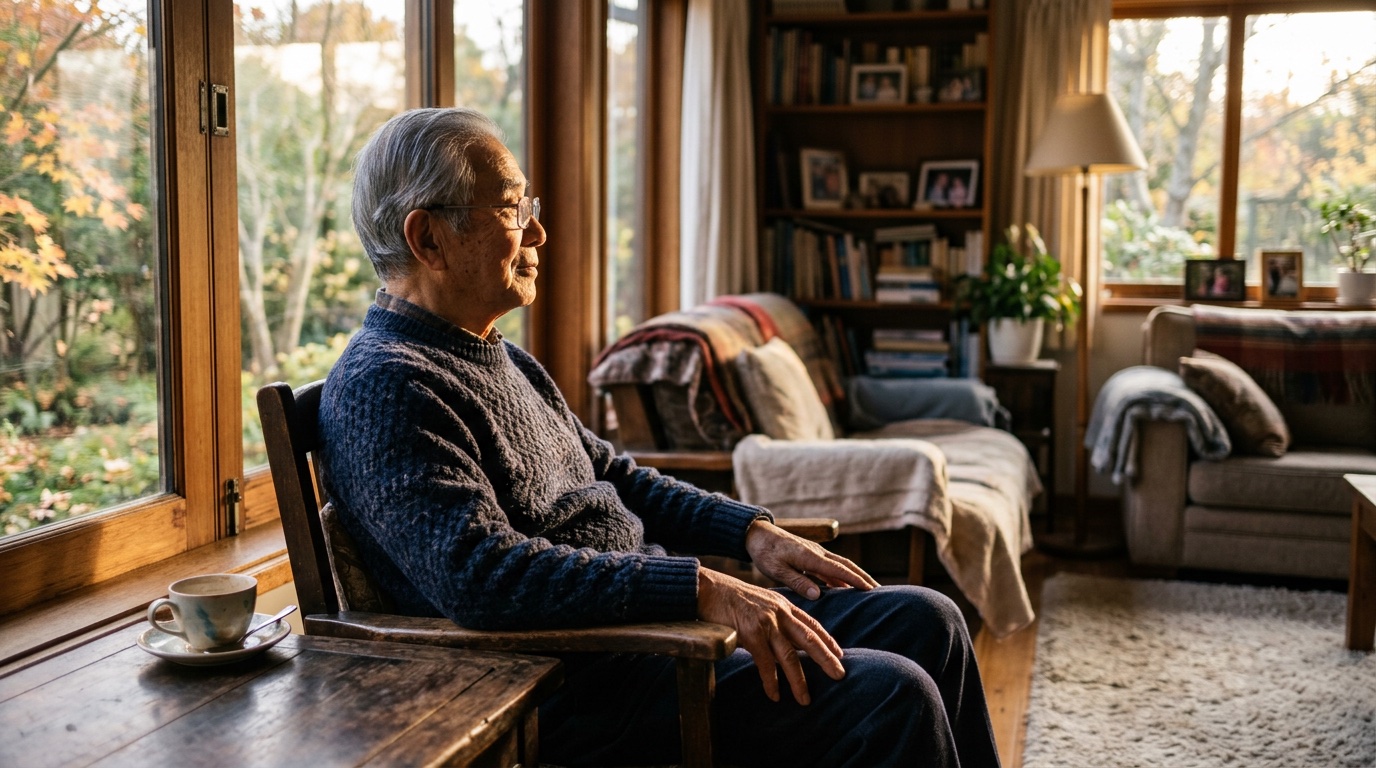
Mitali is a simple app for any phone or tablet. Your loved one just opens it and talks — patient conversation that never corrects or tests them, with nothing for them to learn. And when you’re up at 3am with a question, Mitali is there for you too.
Built by a son who cared for his father through Alzheimer’s.
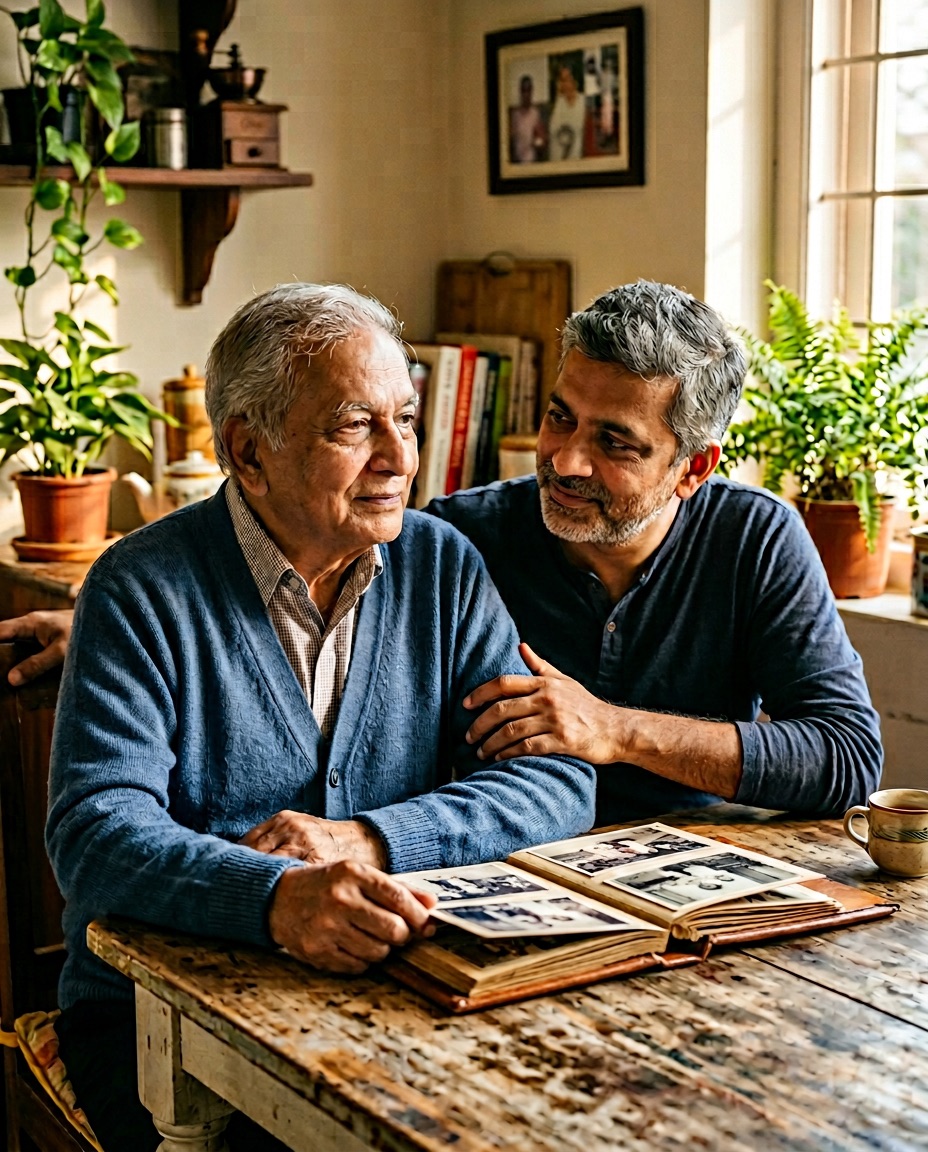
There’s the person living with the diagnosis, and there’s the person carrying everything around it. Mitali is shaped differently for each of you, in the same place.
Conversation that meets them in their world — no correction, no rushing, no test. The same warmth the tenth time as the first. They open Mitali on a phone or tablet and just talk. There’s nothing new to learn.
Ask anything — “Why does she ask to go home when she’s home?” “How do I handle the anger?” Mitali talks it through with you, day or night — support informed by dementia-care research, and a summary that keeps the family close after each conversation.
Two conversations, one quiet thing holding them — a voice for the person you love, and a companion for you.
“Talked about the lake house for about 9 minutes — and mentioned she’d love to call her sister Ruth.”
If a conversation sounds distressed, Mitali can flag it to you and up to 4 family members, with a short note on what came up. It’s a comfort signal — not monitoring, and not a 911 service. It only knows what’s said during a conversation, so it won’t catch everything. In an emergency, call 911.
Mitali is an app you set up once, in a few minutes. After that, there’s nothing for your loved one to figure out — they just open it and talk.
About ten minutes — their name, and a few of the people, places, and stories they love. That’s what makes the conversation theirs.
They open Mitali on a phone or tablet and a warm, familiar voice is already there — one that knows them. No menus, no buttons, no logging in each time.
After each conversation you get a short summary — and a gentle heads-up if something sounded off.
“Just talking” is doing more than it looks.
The conversation has a shape — easy to follow, and never overwhelming.
Built around long-held, familiar memories — the people, places, and stories they know best, so there’s always an easy thread to follow.
Their people and places — and the photos and stories your family adds — become part of it.
Add a photo of the people and places that matter — with a few words about who’s in it. Mitali brings it gently into the conversation: your loved one sees the photo, and the companion talks with them about it. No quizzing, no correcting — just the memory, and the warmth around it.
“Mom and her sister Ruth at the lake house, 1974.” A face, a place, a day — with a note about who’s in it. Private and encrypted.
In a gentle reminiscence conversation, the photo appears and the companion follows the memory wherever it goes — with the same patience every time.
It comes back to you in the summary afterward — what they remembered, and how it felt.
This is what makes Mitali theirs — a familiar face, a real memory, and a companion that’s endlessly patient with both. It’s built on a simple, human idea: the stories we’ve told for years are often the easiest ones to pick back up.
Dementia changes the person you love, a little at a time. They’re still in the room — some days just harder to reach than others. You can find yourself missing someone who is still here. There isn’t a name for that, and there isn’t a script. Mitali Memory was made for these in-between moments anyway.
Grief that arrives before loss is real — and no one should carry it alone.
There’s the long stretch where you’re learning. There’s the day everything shifts. There’s the season of looking for help. Mitali isn’t a checklist of phases — it knows that caregiving moves in states, and that you don’t move through them in order. It’s there for the state you’re in, when you’re in it.
The word lands and the future rearranges itself. You’re trying to understand what this means for the years ahead, and what you’re supposed to do now.
The day-to-day rhythm that takes everything you have. Repetition, patience, small wins, and the slow erosion of knowing what’s normal. The marathon nobody trained you for.
An ER visit. A wandering. A fall. Something just changed, and the plan you had is no longer the plan. You need to make a decision and there isn’t enough time to make it.
When home care, day programs, or memory care become real questions. The financial weight, the emotional weight, the guilt of even asking — all at once.
Mitali Memory is a voice companion built for conversation and connection. It is honest about what it is not — and that honesty is part of how it keeps your loved one safe.
Built for connection and comfort. It does not diagnose, treat, or provide emergency services of any kind. In an emergency, call 911.
Health information is encrypted end to end and stored on secure AWS infrastructure. Your data is yours — download or delete it anytime.
Inspired by a simple, well-known idea — that familiar people, places, and stories are often the easiest, most comforting things to talk about.
A companion between visits — not a substitute for your loved one’s doctors or care plan.
The companion chat for you is free, for as long as you need it. When you’re ready to give your loved one voice conversations, that’s where a plan comes in — and you can stop anytime.
For the caregiver who needs a steady place to turn — start here, at no cost, for as long as you like.
Voice conversations for your loved one, and the family connection that keeps everyone close. 30-day free trial. Cancel anytime.
Want more voice time? Care ($99/mo) and Immersive ($249/mo) add longer and more frequent conversations. Most families start with Companion — and many never need more.
We’re opening Mitali Memory in cohorts, starting with 100 founding caregivers. If you want a steady voice for this journey — and a hand in shaping what we build next — leave your details and we’ll be in touch.
Health information encrypted end to end on secure AWS infrastructure.
Built for engagement and comfort. Never diagnoses or treats, not an emergency service.
A companion between visits — not a substitute for your loved one’s clinicians or care plan.